Design Foundations · 0-1 Product
Building a skills platform from 0 to MVP in 6 weeks
End-to-end design engagement spanning brand strategy, product design, AI-assisted full-stack development, and user research planning — translating an early-stage concept into a testable, cohesive system ready for validation.
Problem
Organizations and professionals seeking talent development solutions struggle to identify credible, modern partners that go beyond traditional approaches. Without a clear, consistent brand presence, Launch Catalyst risks being overlooked by its intended decision-makers and learners, jeopardizing early traction before MVP validation.
Scope
Design direction: brand strategy, product strategy, end-to-end UX/UI, AI-assisted full-stack development, research planning — translating concept to working prototype with synthetic data and validation frameworks.
Delivery
0-1 design for Launch Catalyst. The brand has all components to communicate mission and vision, connecting business goals to user needs. Working prototype enables early user validation, with the team expecting to onboard 1k users and measure MVP value by mid-April 2026.
Outcomes
A cohesive brand, product strategy, and functional web application delivered in six weeks — enabling Launch Catalyst to present and test with early users while validating the core hypothesis that skills can be understood more deeply than resumes allow.
0 → 1
Full brand + working MVP in 6 weeks
1,000
Expected early users for validation
3
User segments with clear value hypotheses
Skills
Strategy & Product Thinking
Product strategy & vision definition
Problem framing & opportunity design
Value proposition development
Metrics, validation, and experimentation
Brand & Design Systems
Brand strategy & positioning
Tone of voice & narrative systems
Visual identity (typography, color, imagery)
Design principles and systems thinking
UX / UI & Interaction Design
End-to-end product design (0 → 1)
Information architecture & user flows
Interface and interaction design
High-fidelity prototyping
AI & Full-Stack Product Development
AI-assisted development (coding with LLMs)
System architecture definition (front-end & back-end)
Intelligence layer design for AI-driven features
Synthetic data modeling for realistic prototyping
Orchestration of the full product system from concept to working application
Research & Validation
User research planning
Discussion guide design
Soft skills
Partnership, facilitation, and leadership habits — expand for the full list.
Adaptability
Agile & delivery literacy
Building trust in teams
Client & founder partnership
Coaching
Conflict navigation
Cross-cultural collaboration
Cross-functional collaboration
Curiosity & learning agility
Delegation & empowerment
Empathy & listening
Executive partnership
Executive presence
Facilitation & listening sessions
Giving & receiving feedback
Inclusive collaboration
Influence without authority
Mentoring
Navigating ambiguity
Ownership & accountability
Prioritization & tradeoffs
Product & engineering partnership
Reliability
Resilience
Stakeholder alignment
Strategic communication
Storytelling & narrative
Systems thinking
Talent development
Vision & narrative alignment
Context
Led an end-to-end design engagement for Skills Passport, a platform focused on enabling equitable access to meaningful employment by aligning individuals' skills with real-world opportunities.
Within a six-week engagement, translated an early-stage concept into a cohesive, scalable, and testable product system — spanning brand, strategy, and full-stack product design.
Owned the design, architecture, and implementation of a working web application, using AI-assisted development tools to accelerate coding while directly orchestrating the system's logic, structure, and experience.
"We're building a skills intelligence platform that reveals human potential and connects the right people to the right roles — expanding opportunity while helping employers hire better talent."
Challenge
How might we understand people's capabilities and potential beyond flat resumes — and help organizations identify credible, modern talent development partners in a crowded HR tech landscape?
Competitor brands design for transactions, not people — over-indexing in corporate tone and a mainstream legal look.
Approach
1. Brand & Positioning
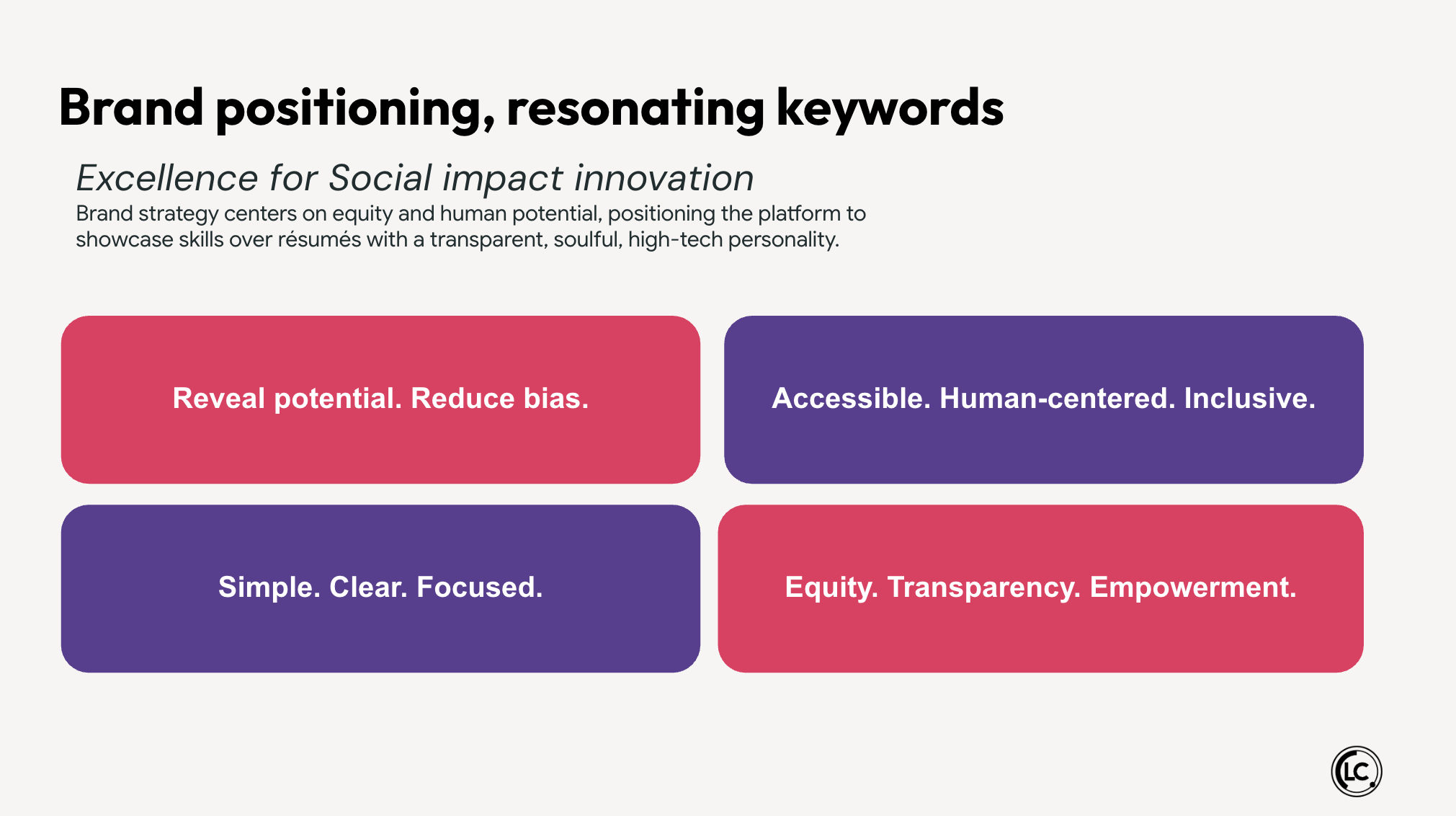
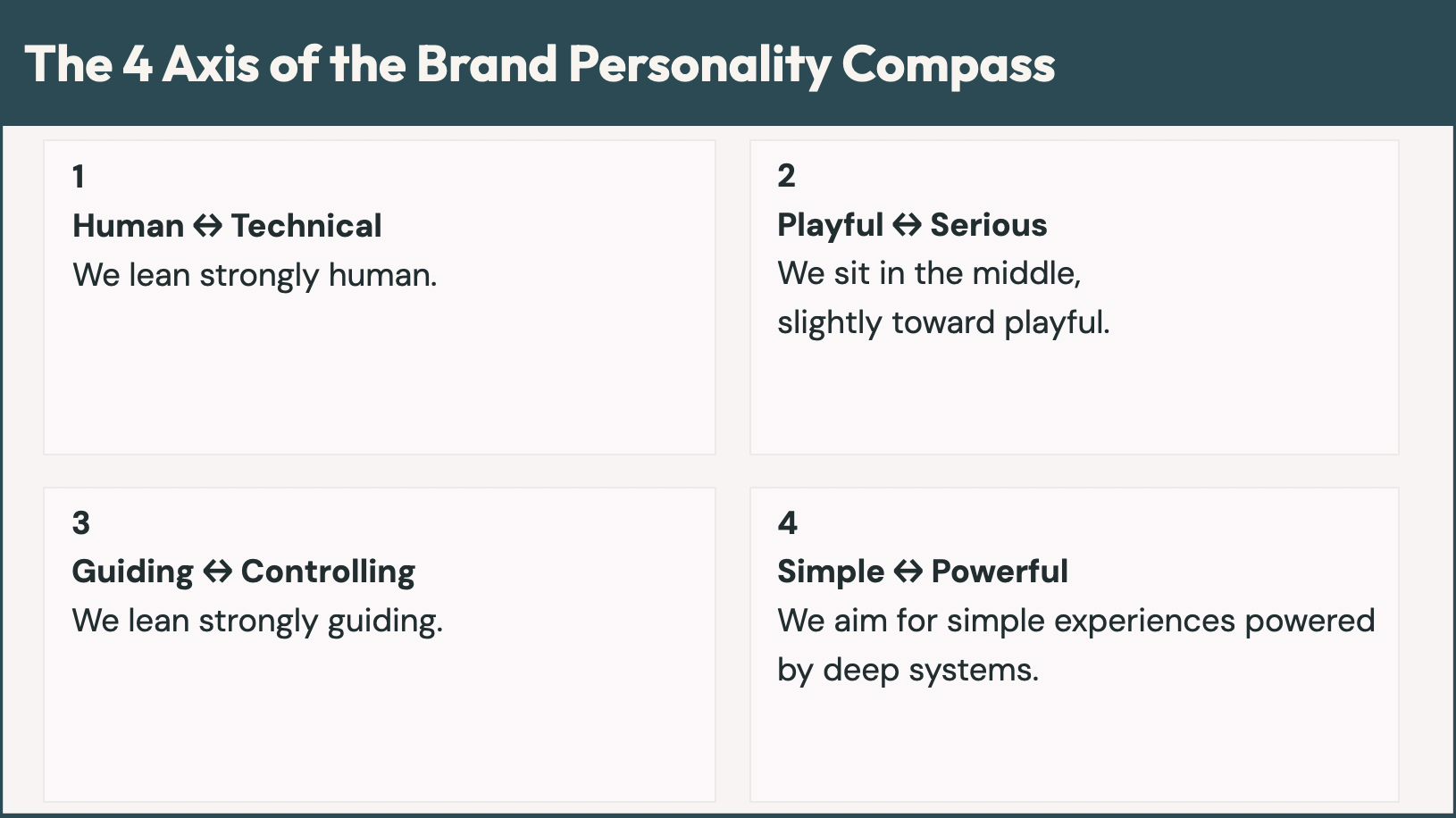
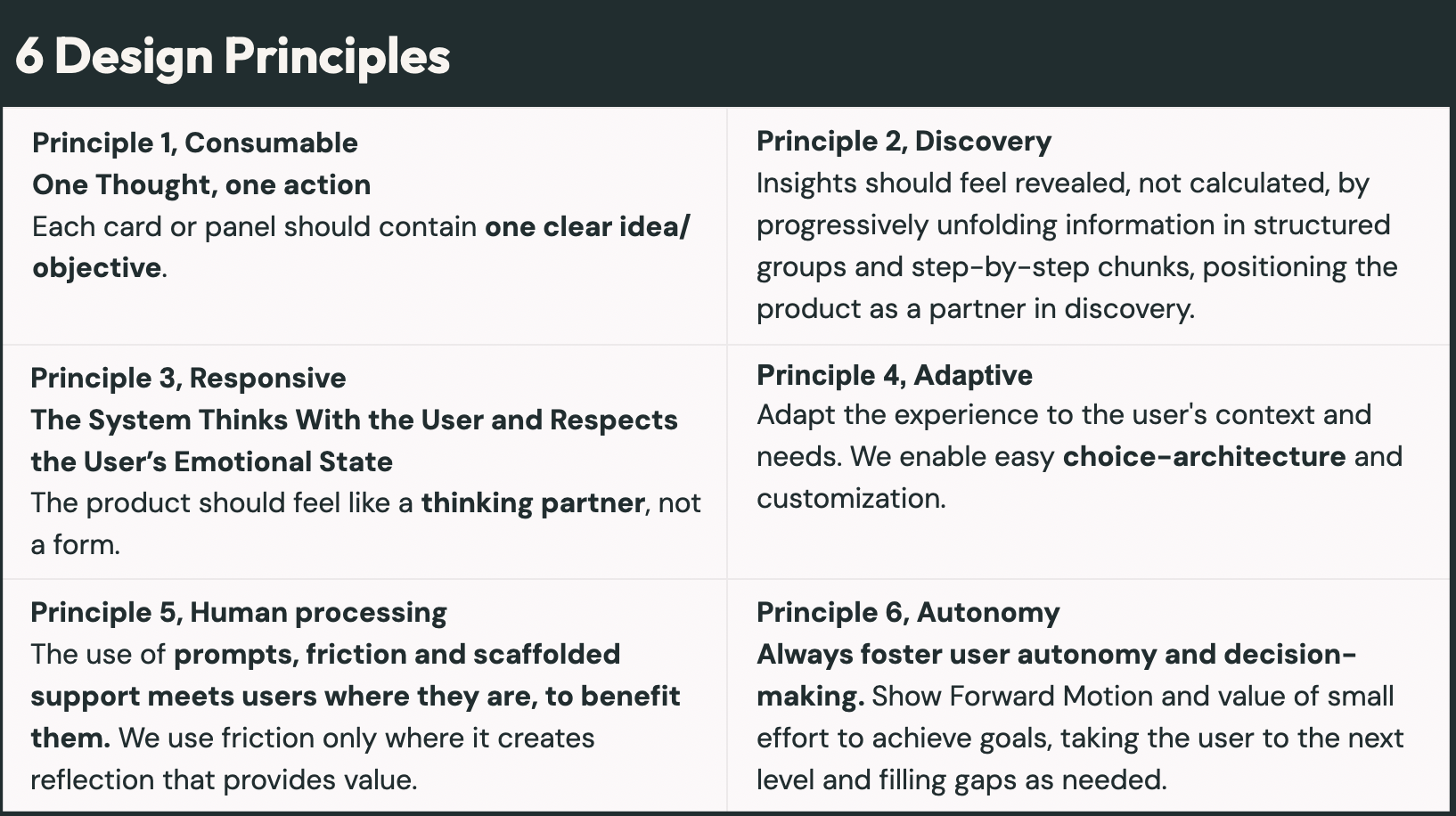
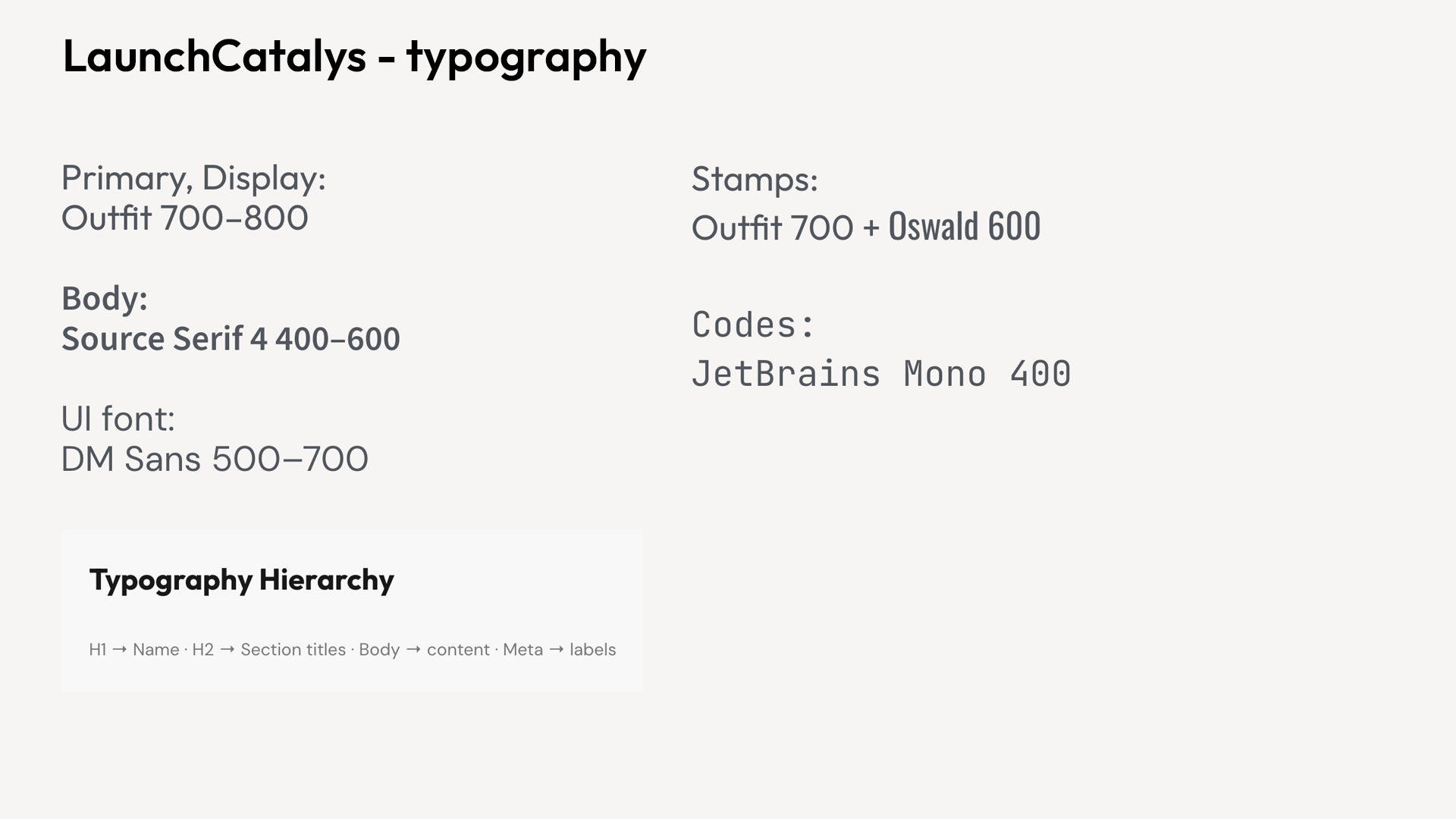
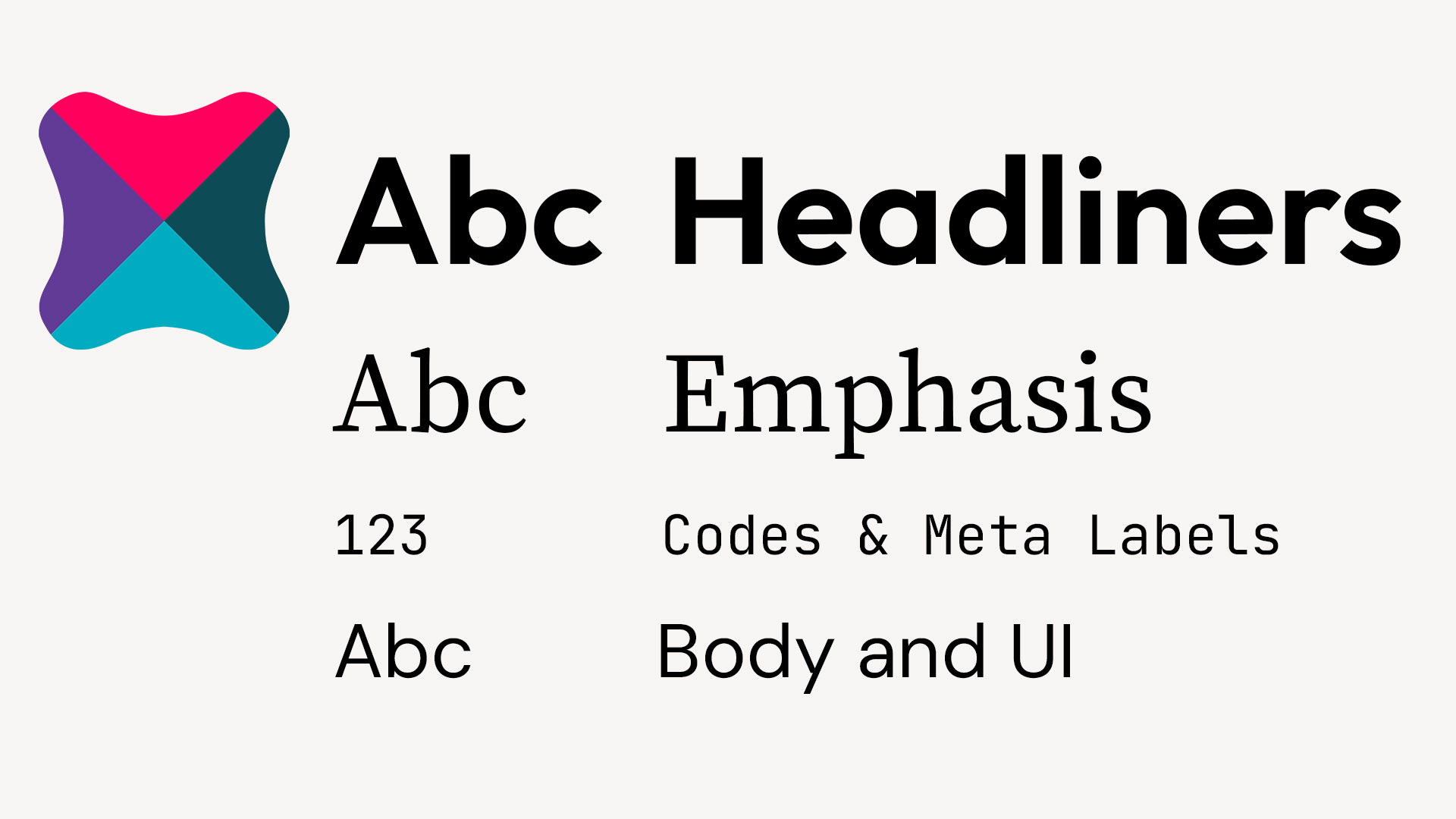
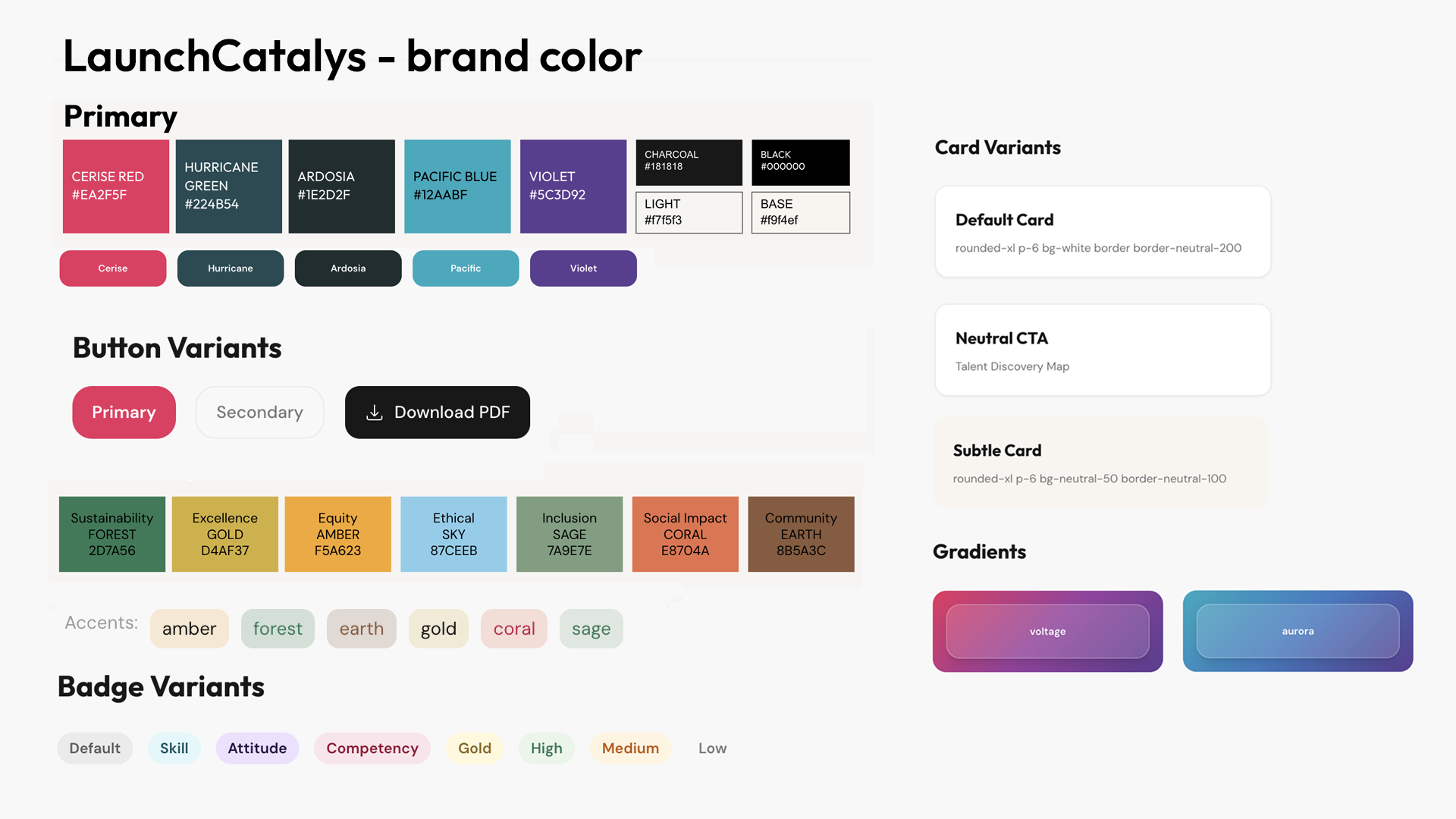
Defined mission, vision, value proposition, and narrative. Designed a cohesive brand system aligned with the parent organization, including tone of voice, personality, principles, typography, color system, and visual direction.
- Mission: Build the most trusted system for objectively understanding human capability and making precise talent matches at scale.
- Vision: A world where opportunity is driven by proven human potential, free from bias or privilege.
2. Design Strategy
Framed the problem space and clarified user segments, needs, and pain points across three audiences: candidates, employers and institutions. Defined value drivers, product hypotheses, success metrics, and validation approaches to guide scalable development.
Clarity on Problems, Needs, and Value Opportunity
Problem Statement
The current talent ecosystem fails candidates, employers, and institutions: resumes flatten human potential into keywords, hiring processes are noisy and biased, and educational outcomes remain disconnected from opportunity — leaving talent underrepresented, employers with bad hires, and institutions unable to demonstrate value.
What they want
- Candidates seek clarity on their capabilities and ways to express their evolving potential
- Employers need signal over noise — visibility into real capability, not just credentials
- Institutions want to bridge learning outcomes to meaningful employment and differentiate their programs
LaunchCatalyst's Value
A trusted skills intelligence platform that:
- Enables candidates to understand and articulate their evolving capabilities
- Helps employers identify high-potential talent faster with less bias
- Empowers institutions to translate learning into visible, credible employment outcomes
- Creates a common language for capability that expands access to opportunity through transparent, objective skill assessment
Problems
Talent is underrepresented because resumes fail to capture human capability.
- Resumes flatten people into keywords
- Skills are inferred poorly (or not at all)
- Growth potential is invisible
- People don't know how to tell their story
What they want
Candidates need tools to understand and communicate their evolving capabilities.
- "Help me understand what I'm good at."
- "Help me tell my story clearly."
- "Show me where I'm going."
- "Make me legible to opportunity."
Value hypothesis
Understand and express your capabilities with clarity, confidence, and direction.
- Clarity of strengths
- Confidence in identity
- Better positioning for jobs
- Visibility of growth
Problems
Bad hires and missed talent due to noisy, biased hiring processes.
- Hiring is noisy, biased, and inefficient
- Signal is buried under credentials and formatting
- Hard to evaluate: soft skills, potential, real capability
- Over-reliance on proxies (schools, titles)
What they want
Employers seek confidence in identifying capable talent beyond credentials.
- "Show me who is actually capable."
- "Reduce noise, increase signal."
- "Help me trust the decision."
- "Predict potential, not just history."
Value hypothesis
Identify high-signal candidates faster, with a deeper understanding and less bias.
- Better hiring decisions
- Reduced screening time
- Improved quality of hire
- Visibility into potential
Problems
Misalignment and underemployment because there's no bridge from learning to opportunity.
- No clear bridge from: learning → capability → opportunity
- Students don't know: what they're good at, how they're evolving, where they fit
What they want
Institutions need to demonstrate tangible outcomes that connect learning to employment.
- "Show outcomes of our students"
- "Bridge learning → employment."
- "Differentiate our talent."
Value hypothesis
Translate learning into visible, credible capability outcomes.
- Demonstrate student success
- Improve placement rates
- Differentiate programs
3. Product Design & Development
Designed and built the V1 product experience, including UX flows, UI systems, and interaction patterns. Established design principles to guide product evolution. Architected the intelligence layer, integrating AI for skill assessment and matching. Developed a functional web application prototype using synthetic candidate data — leading both front-end experience and back-end structure, with AI-assisted coding workflows.
4. User Research
Created research plans and structured discussion guides to support discovery and validation:
- Candidates (students): Learn what motivates and challenges students as they transition from education to employment; uncover barriers to adoption; identify ways to make the passport more supportive and representative
- HR recruiters: Understand motivations and challenges; identify adoption barriers; find ways to enhance the passport so HR can easily leverage feedback and data beyond traditional resumes
Results & learnings
LaunchCatalyst has a working prototype to validate with users, with recommended success metrics approach:
- North Star Metric: % of users whose capabilities are clearly understood and lead to aligned opportunity
- Supporting signals: clarity (self + external), trust (employer), alignment (job fit)
The working prototype I delivered will serve as the foundation for the next iteration. I expect that user research insights gathered over the coming weeks will inform a new instance of the product — and that in 6 weeks, the product will be significantly stronger, more refined, and better aligned with user needs based on user research.
The team is now iterating on v2. View v1 prototype →
What I'd repeat on the next engagement
- Start with problems and value hypotheses before solutions. The synthesis framework (carousel cards) that mapped stakeholder problems, needs, and value became both a strategic alignment tool and a deliverable. Investing upfront in problem clarity accelerates everything downstream — from design decisions to stakeholder buy-in.
- Intentional upfront work on brand and design systems doesn't slow down 0-1 — it accelerates it. The 6-week timeline was possible because foundational decisions (principles, personality, design language) created clear guardrails for rapid execution. Design thinking and user-centered design remain as critical today as decades ago: gathering insights and defining design principles anchors an MVP that feels cohesive and has a strong value proposition.
- Design for clarity across stakeholders, not just end users. With three distinct audiences (candidates, employers, institutions), creating frameworks that show how different needs connect to unified value helps teams align and communicate strategy. Multi-stakeholder complexity requires explicit synthesis.
- When using AI for development, spend 60-70% of time on design system definition and constraints. A valuable, reliable product needs to be cohesive, simple, and consistent. The brand and design system's intentionality is essential: defining and refining, adding guardrails, and simplifying require detail and patience. The code generation is fast — the clarity is what takes time.
- Build with metrics and research plans from the start, not as an afterthought. Defining the North Star metric and validation approach before development ensures you're building something measurable and testable. The research plans delivered alongside the prototype position the team to validate with confidence.
Testimonials
"Azul is a force. She's got the client management, strategic, visual, technical, and adaptive skills to work with any team to turn big ideas into reality." She transformed an early-stage idea into a fully articulated product—brand and positioning, clarified opportunity, and a fully functional AI-enabled prototype—including initial tech infrastructure for customer testing. "I have worked with award winning designers and I was truly flabbergasted at her pace, focus, ability to listen and translate our ideas, and her technical product development skills."
Design Strategy
Branding
Product Design
AI integration
Prototyping
Emerging Technology
Go-to-market design strategy
Customer Experience
Avelia Stewart, MA, CPHR, SHRM-SCP
Founder & Executive Director · Global people, culture & equity leader
Client — Launch Catalyst · March 21, 2026
"Azul led the end-to-end design engagement for Launch Catalyst's Skills Passport product, and the impact was immediate and lasting. In just a few weeks, she took us from an early-stage concept to a clear, structured, and testable solution ready for the next phase of development." Strategic vision with hands-on execution: brand, product vision, and a working prototype, with AI-enabled functionality translated into a cohesive product experience.
Design Strategy
Learning Design
Branding
Product Design
AI integration
Prototyping
Customer Experience