Service Design
IT Service Experience, 100% reliable operations, and –50% response time in 1 year
Leading UX and service design strategy for IT support services — designing omni-channel experiences, rebranding for trust and reliability, and building service design capabilities across a distributed 3,000-person function supporting 45,000 workers in 65 countries.
Problem
IT support had to scale globally for tens of thousands of workers — with fragmented channels, rising expectations, and pressure to modernize tools and operations without sacrificing reliability.
Scope
Design Lead (with managerial scope): UX and service design strategy for IT support — omni-channel journeys, rebranding for trust, and building service-design capability in a large distributed function.
Delivery
Stronger satisfaction and faster resolution at scale — plus managers equipped to own journeys, shifting culture toward proactive, systems-level service improvement.
Outcomes
Demonstrated that service design in IT could lift both employee experience and operations — satisfaction up, resolution time down, and capability spread across a 3,000-person support organization.
80%
Increase in customer satisfaction — 45,000 workers in 65 countries
50%
Reduction in resolution time within one year
3,000
Scaled a coaching system across a distributed function; organizational investment paid off in Service Design capabilities across the customer journey
Skills
Domains & employee experience
Enterprise Applications
Customer Experience
Branding
Service, research & omni-channel craft
Service Design
User Research
Omni-Channel Design
Operations Design
Workshop Facilitation
Capability Building
Strategy, transformation & systems
UX Strategy
Design Strategy
Digital Transformation
Design Systems
Soft skills
Partnership, facilitation, and leadership habits — expand for the full list.
Adaptability
Agile & delivery literacy
Building trust in teams
Client & founder partnership
Coaching
Conflict navigation
Cross-cultural collaboration
Cross-functional collaboration
Curiosity & learning agility
Delegation & empowerment
Empathy & listening
Executive partnership
Executive presence
Facilitation & listening sessions
Giving & receiving feedback
Inclusive collaboration
Influence without authority
Mentoring
Navigating ambiguity
Ownership & accountability
Prioritization & tradeoffs
Product & engineering partnership
Reliability
Resilience
Stakeholder alignment
Strategic communication
Storytelling & narrative
Systems thinking
Talent development
Vision & narrative alignment
Context
Supporting 45,000 workers in more than 65 countries with global infrastructure, technology, and services demands robust solutions that enable seamless data access, connected services, and specialized tools for flexible, on-the-go work. Delivering rapid, high-quality customer service around the clock — while ensuring safety, managing logistics, overseeing vendors, and maintaining responsible operations — is essential. Customer support teams had to adopt digital tools and services to scale and manage systems and operations more effectively.
I served as Design Lead with managerial responsibilities, overseeing UX and service design strategy and execution for IT support services.
Challenge
How might we reduce friction for IT customers and improve operations at a global scale?
How might we modernize and integrate these services to address specific needs, ensure compliance, and streamline organizational design?
Collaboration & ownership
What I owned, who I led, and who I worked with.
- Accountability: UX and service design strategy for IT support — omni-channel vision, self-service and portal work, rebrand embedded in UI, and workshops that built lasting journey ownership.
- Team: Worked with support and IT teams to prototype, test, and refine; coached managers on service design so improvements could continue without relying on a single project phase.
- Stakeholders: Balanced employee needs, compliance, and operational reality in 65+ countries — pushing for consumer-grade clarity without ignoring enterprise constraints.
Approach
The vision was a customer support ecosystem that would feel as seamless and reliable as consumer-grade experiences: simple self-service, omni-channel consistency, and predictive guidance. The goal was not just to resolve IT issues, but to elevate the overall employee experience and improve organizational efficiency worldwide.
Omni-channel consistency & help centers
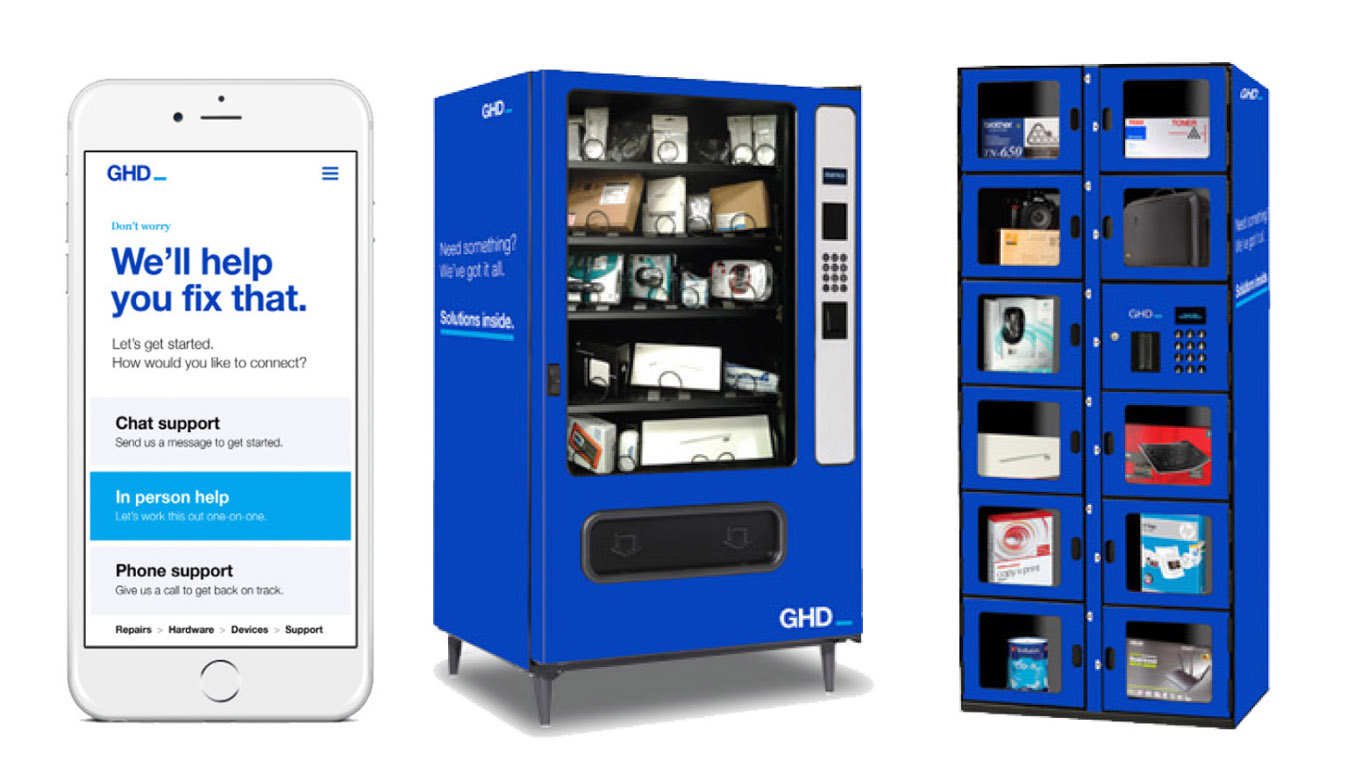
Our priority was digital experiences designed for ease and efficiency — with patterns that aligned chat, phone, portal, and walk-in support so users could switch channels without confusion. I prototyped and tested self-service flows, knowledge bases, and ticketing tools with service teams and real users to refine usability.
Brand & UI integration
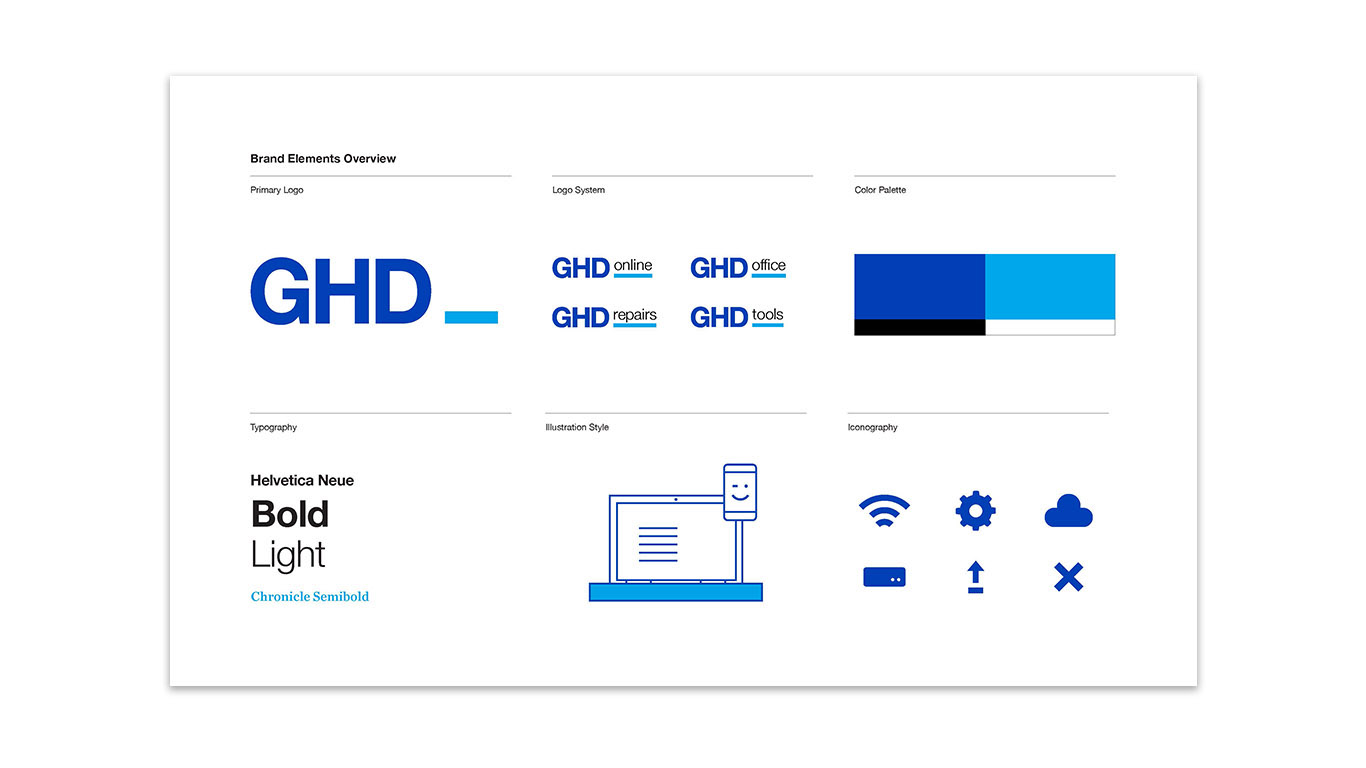
These changes, driven by increased customer autonomy, required a rebrand to inspire trust, reliability, and ease. I embedded a new support brand into the UI, balancing clarity, reassurance, and simplicity. Unified branding increased trust — users reported greater confidence in the support channel's reliability. The redesigned IT service experiences delivered end-to-end, streamlined workflows and interfaces that reduced customer friction and improved operational efficiency.
Capability building
Customer support managers had the knowledge and tools to own and improve customer service journeys. I coached support managers on service design methods, enabling them to own and continuously improve customer journeys. Teams mapped end-to-end experiences from issue recognition to resolution, identifying systemic friction and innovating solutions. I facilitated co-creation workshops with IT staff and end users to address structural bottlenecks and daily employee needs, embedding journey-mapping practices across teams for sustained impact. This shifted the culture from reactive task execution to proactive, systems-thinking innovation — core to organizational agility.
Results & learnings
Business takeaway
Effective IT service design aligns channels, brand trust, and operations for faster resolution and durable organizational capability.
What I’d repeat — and where I’d go next
- Keep investing in journey ownership. Coaching managers on service design made improvements stick beyond the initial redesign.
- Explore predictive support with responsible AI-driven signals when data and governance allow.
- Extend dashboards and transparency so employees and people leaders can see service health — especially as tools for insights and consulting grow more complex.
- Spread capability beyond Technology & Digital so customer-centric service thinking scales across the enterprise.
Testimonials
Julie Rozof
Director II, Global Tech Ecosystem Strategic Planning & Transformation
Manager — McKinsey WOW · February 8, 2026
On McKinsey's Technology & Digital "Way of Working" transformation: Azul "co-created and delivered user-centered curriculum and workshops that trained 2,000+ colleagues across four continents—driving 90% adoption and 95% satisfaction in new ways of working." She also led jobs-to-be-done research informing strategy, redesigned engineering onboarding from ~90 days to ~30 days through behavior design, and codified tools and frameworks for the center of excellence.
Organizational Transformation
Learning Design
User Research
Jobs-to-be-done research
Workshop Facilitation
Behavior Design
Center of Excellence
Curriculum Design
Enablement
Organizational Design